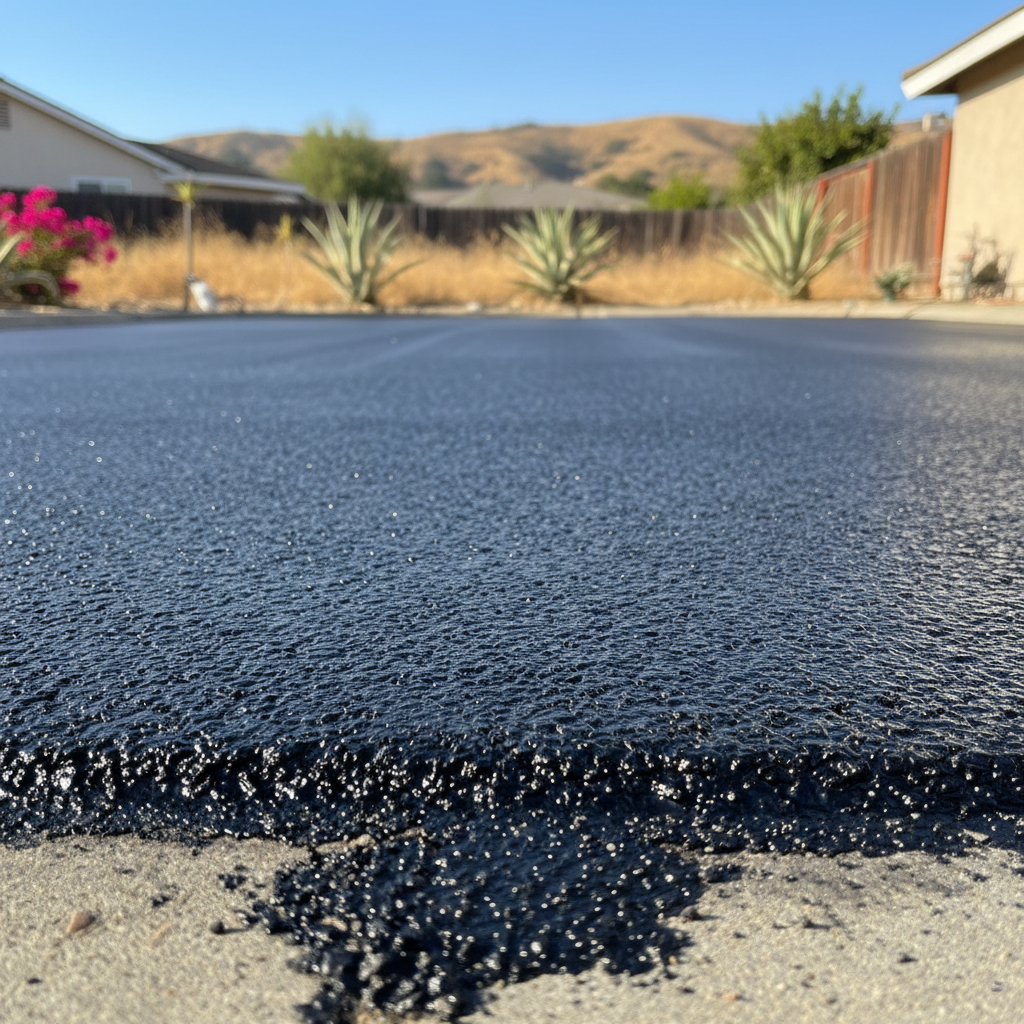
Alright, let's talk about slurry coating. I get a lot of calls from folks around Ventura, especially after a few hot summers and wet winters, asking about their driveways and parking areas. Slurry seal is a topic that comes up a lot, and there's plenty of confusion out there. So, I figured I'd tackle the most common questions I hear from homeowners right here. No marketing fluff, just straight talk about what it is, what it does, and if it's right for you.
What exactly is slurry coating? Is it just paint for my driveway?
Oh, definitely not just paint! Slurry coating, or slurry seal as we usually call it, is a mix of asphalt emulsion, fine aggregates (think sand and tiny crushed rock), water, and some special additives. We spread it as a thin, uniform layer over your existing asphalt. Picture it like a protective skin for your pavement. It's designed to fill small cracks, make the surface less slippery, and bring back that rich, black color your asphalt had when it was new. It's a maintenance treatment, mind you, not a structural repair. It won't fix big potholes or major cracking, but it's fantastic for extending the life of healthy asphalt.
How long does a slurry coat typically last here in Ventura?
That's a great question, and it really depends on a few things. Here in Ventura, with our coastal weather — sometimes foggy, sometimes blazing hot, and then those heavy winter rains — a good quality slurry seal, properly applied, usually lasts anywhere from five to seven years. If you've got a busy commercial lot, or a residential driveway with heavy vehicle traffic every single day, it might be closer to five. For a quiet residential street or a backyard basketball court, you could easily get seven years or even more. It also depends on how well the original asphalt was maintained before we put the slurry seal down. If it was already in rough shape, the slurry just won't last as long.
When's the best time of year to get this done in Ventura?
Timing is crucial for a successful slurry application. You really need warm, dry weather for the material to cure right. That means we're usually looking at late spring through early fall here in Ventura. I like to see consistent daytime temperatures above 60-65 degrees Fahrenheit, and no rain in the forecast for at least 24-48 hours after we finish. Trying to do it in the middle of winter, especially when we get those heavy El Niño rains, is just asking for trouble. The material won't bond correctly, and you'll end up with a mess. We've done jobs in areas like the hills above Foothill Road where the temperature can drop quickly in the evening, so we always keep a close eye on that.
My driveway has some cracks. Will slurry coating fix them?
Okay, this is a common misconception. Slurry coating is great for filling very fine, hairline cracks — the kind that are less than about 1/8 inch wide. It's like putting a fresh coat of paint over a slightly textured wall; it smooths it out a bit. But if you have larger cracks, alligator cracking (which, you guessed it, looks like alligator skin), or potholes, those need to be repaired *before* we apply any slurry. We'll typically clean them out, fill them with hot asphalt, and then let that cure. Slurry seal is a preventative measure and a surface rejuvenator, not a crack repair solution for anything significant. If you just slurry over big cracks, they'll show through again pretty quickly, and the slurry itself might even fail around those areas. What a waste!
How long do I need to stay off my driveway after it's been slurry coated?
Patience is a virtue here, my friend. After we apply the slurry, it needs time to cure and harden. Generally, you'll need to keep vehicles off it for at least 24-48 hours. Sometimes, if it's a cooler day or there's more humidity, it might need a little longer. Walking on it after a few hours is usually fine, but driving a car, especially turning your wheels while stationary, can scuff and damage the fresh surface. We'll always give you specific instructions for your job, but plan on leaving your cars on the street or somewhere else for a couple of days. It's a small inconvenience for a long-lasting finish.
Is it really worth the cost? What are the benefits?
Absolutely, it's worth it, especially if you want to protect your investment. Think of it like painting your house or getting an oil change for your car — it's preventative maintenance. The benefits are clear: it seals small cracks, stopping water from getting into your asphalt's base layers and causing bigger, more expensive problems down the road. It protects the asphalt from UV rays and oxidation, which are big issues with our intense California sun. It restores the appearance, making your property look much better, which can even boost curb appeal. And, crucially, it's significantly less expensive than having to completely repave your driveway or parking lot. For Omega Asphalt Inc., we see it as a smart, cost-effective way to extend the life of your pavement.
What's the difference between slurry coating and sealcoating? Are they the same thing?
This is another common one. While both are asphalt maintenance treatments, they're not exactly the same. Sealcoating, often called 'coal tar emulsion' or 'asphalt emulsion' sealer, is a thinner, usually liquid-only application. It's great for protecting the surface, restoring color, and filling very, very fine pores. Slurry coating, on the other hand, is a thicker material because it incorporates those fine aggregates (sand, crushed rock). This makes it more durable, gives it better skid resistance, and allows it to fill slightly larger cracks and minor surface imperfections that sealcoat just can't handle. So, while both protect, slurry seal offers a bit more structural integrity and a longer lifespan for the surface itself. It's a more robust treatment.
Hopefully, that clears up some of the questions you might have about slurry coating. If you're looking at your asphalt and wondering if it's time for a refresh, give us a call. We're happy to come out, take a look, and give you an honest assessment.